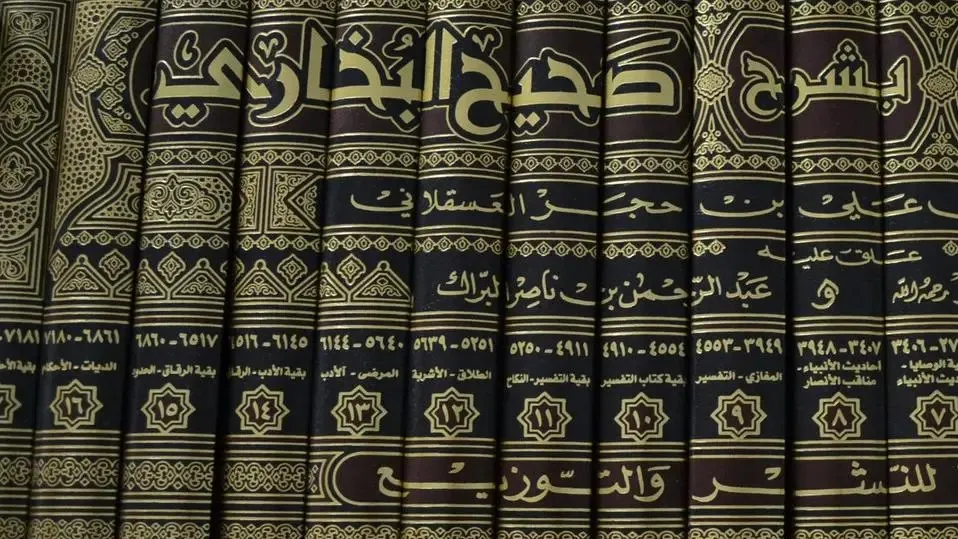
Explaining Islam to a child begins with clear, manageable ideas: Muslims worship Allah alone, the Quran is Allah’s revelation, and Muhammad, peace be upon him, is His final Messenger. Introduce these ideas patiently and welcome questions without expecting an adult-level explanation.
Parents can then connect belief with worship, kindness and everyday conduct. The source covers Tawheed, the Prophet’s role, the five pillars, the Hereafter and unseen creation. Keep the discussion appropriate to the child’s age and understanding, and ask a knowledgeable teacher when a question needs more detail.
Table of Contents
- What Does Islam Mean?
- What Is a Muslim?
- Teach Tawheed through Al-Ikhlas
- Explain the Role of Prophet Muhammad
- Explain the Five Pillars with Simple Examples
- Discuss Jannah and Hellfire with Care
- Introduce Jinn and Shayateen Gently
- Welcome Questions and Seek Suitable Support
- Build Understanding through Gentle, Continuing Learning
- Frequently Asked Questions
What Does Islam Mean?
Islam refers to submission to Allah. The Arabic root S-L-M also relates to peace and soundness, which the source uses to connect accepting guidance with peaceful conduct. “Submission” is the more direct explanation of the word Islam; related meanings should not be treated as interchangeable dictionary definitions.
A simple explanation is: “We believe Allah created us, and we try to follow His guidance.” Connect the idea with honesty, care for others, respect and gratitude. Examples from ordinary family life can make a broad concept easier to understand.
What Is a Muslim?
A Muslim is someone who follows Islam and submits to Allah. Explain belief in Allah alone and acceptance of the message taught by Prophet Muhammad, peace be upon him. The Quran is central to that learning.
The source highlights worship and helping others as part of a Muslim’s purpose. Discuss kindness, truthfulness and respect through suitable examples, while making clear that people continue learning and may make mistakes. Faith education should invite understanding rather than require the child to repeat a long definition.
Explore Talqeen Academy’s courses for guided learning and continue with an introduction to Islam for children.
Teach Tawheed through Al-Ikhlas
Tawheed means affirming Allah’s oneness and worshipping Him without partners. The source uses the complete text of Al-Ikhlas, 112:1–4 as a foundation:
lang="ar" dir="rtl">قُلْ هُوَ اللَّهُ أَحَدٌ
اللَّهُ الصَّمَدُ
لَمْ يَلِدْ وَلَمْ يُولَدْ
وَلَمْ يَكُنْ لَهُ كُفُوًا أَحَدٌ
- قُلْ هُوَ اللَّهُ أَحَدٌ: Allah is One, unique and without partners.
- اللَّهُ الصَّمَدُ: all depend on Allah, while He depends on no one. The source’s “Eternal” gloss alone does not express the full teaching point of As-Samad.
- لَمْ يَلِدْ وَلَمْ يُولَدْ: Allah neither begets nor was begotten.
- وَلَمْ يَكُنْ لَهُ كُفُوًا أَحَدٌ: no one is equal or comparable to Him.
Teach the sounds accurately and explain one meaning at a time. A child’s questions may need a calm, short answer rather than a complex discussion. Do not introduce imagined descriptions of Allah to fill a gap in the explanation.
Explain the Role of Prophet Muhammad
Muslims believe Muhammad, peace be upon him, is Allah’s final Messenger. The source introduces the declaration of faith in the familiar wording:
lang="ar" dir="rtl">لَا إِلَٰهَ إِلَّا اللَّهُ، مُحَمَّدٌ رَسُولُ اللَّهِ
Explain its meaning as affirming that only Allah is worthy of worship and that Muhammad is Allah’s Messenger. A child can begin by learning what a messenger does: conveys the message and teaches people how to follow it.
The Quran was revealed over approximately twenty-three years, and the Prophet taught its words and guidance to his companions. The source links this with Islam’s completion and the continuing preservation of Quran learning. Present the lesson through reliable, age-appropriate accounts rather than inventing scenes or dialogue.
Explain the Five Pillars with Simple Examples
The source’s table introduces faith, prayer, charity, fasting and pilgrimage. The explanations below retain those topics while correcting the start time of fasting and including the relevant conditions.
| Pillar | Explanation for children |
|---|---|
| Shahada: declaration of faith | We believe Allah alone deserves worship and Muhammad is His Messenger. This is the foundation of Muslim belief. |
| Salah: prayer | Muslims have five daily prayers, with taught words and actions expressing worship, gratitude and a request for help. Children can learn the habit gradually. |
| Zakat: obligatory charity | Muslims who meet its conditions give the required portion of qualifying wealth. A simple lesson can focus on responsibility and helping others, while distinguishing Zakat from optional giving. |
| Sawm: fasting in Ramadan | Fasting runs from dawn to sunset, not sunrise to sunset. Teach the idea gently and explain that obligations and exemptions have conditions. |
| Hajj: pilgrimage | Those who are able undertake the pilgrimage to Makkah once in a lifetime as an obligation. Discuss shared worship and the sense of community without suggesting everyone must travel regardless of ability. |
For the fasting boundary, see Al-Baqarah 2:187. Keep detailed rulings for suitable guided study instead of giving a child the impression that every adult obligation applies to them in the same way.
Discuss Jannah and Hellfire with Care
The source introduces Jannah as a joyful place of reward and Hellfire as a warning against wrongdoing. Connect the discussion with Allah’s justice, mercy and the value of sincere faith and good conduct, without using frightening descriptions to force compliance.
It quotes Al-Baqarah 2:82: “And those who believe and do good will be the residents of Paradise. They will be there forever.” Explain a suitable meaning and avoid pronouncing a particular person’s final fate.
The source also quotes: “When Allah created Paradise and Hellfire, He sent Gabriel to Paradise, saying: ‘Look at it and at what I have prepared therein for its inhabitants.’” The matching narration is linked here to Jami at-Tirmidhi 2560, rather than relying on the source’s Sahih Muslim 2843 attribution.
This narration appears in a fuller account concerning the paths to Paradise and the Fire. A parent can explain the relevant lesson briefly and return to mercy, responsibility and hope. The source’s simplified description should not imply that every mistake places a child beyond forgiveness.
Introduce Jinn and Shayateen Gently
The source describes jinn as Allah’s creation with moral choices and distinguishes obedient jinn from those who do wrong. Do not suggest that all jinn are evil. Keep the subject factual and age-appropriate, without horror stories or invented explanations for ordinary noises and events.
It cites Adh-Dhariyat 51:56: “And I did not create the jinn and mankind except to worship Me.” This provides a clear learning connection about worship rather than a reason to frighten a child.
The source also recalls the guidance to keep children close at nightfall, linked to Sahih al-Bukhari 3280. Its wording, “When evening comes, keep your children indoors, for the devils come out at that time,” summarises part of a longer narration that also says they can be let free after a period. Do not turn the abbreviated wording into an indefinite ban on going out.
Teach suitable duas for seeking Allah’s protection with a reassuring explanation. Avoid promising that a particular learning exercise will prevent every possible harm, and keep ordinary care for the child alongside religious teaching.
Welcome Questions and Seek Suitable Support
Ask what the child understood and let them say when something is confusing. A short answer can be enough for now; you can return to the topic as they grow. If you do not know an answer, say that you will check rather than invent one.
The source recommends experienced tutors and online Islamic classes as support for parents. Assess the teacher’s knowledge, patience and age-appropriate method in an actual lesson. Continue with engaging Quran activities to connect faith discussion with suitable practice.
Build Understanding through Gentle, Continuing Learning
Start with Allah’s oneness, the Quran and the Prophet’s message, then introduce worship and conduct in manageable steps. Preserve accurate Arabic and reliable references while keeping explanations appropriate to the child.
Family discussion and suitable teaching can support each other. The goal is a foundation the child can understand, ask about and continue developing with confidence.
Related Reading and Learning Options
Explore related articles and course options below. External Quran and language references are retained where they support the topic.
- 5 Pillars of Islam
- Islamic studies for kids
- Start Your Islam Learning Journey Now
- Quran 2:82
- Sahih Muslim 2843
- Quran 51:56
- Sahih Bukhari 3280
- online Islamic classes
- quran tutors
- online Quran classes for kids
 Talqeen Academy
is a globally recognized platform for learning the Quran, Arabic,
and Islamic Studies through personalized one-on-one online sessions with expert tutors.