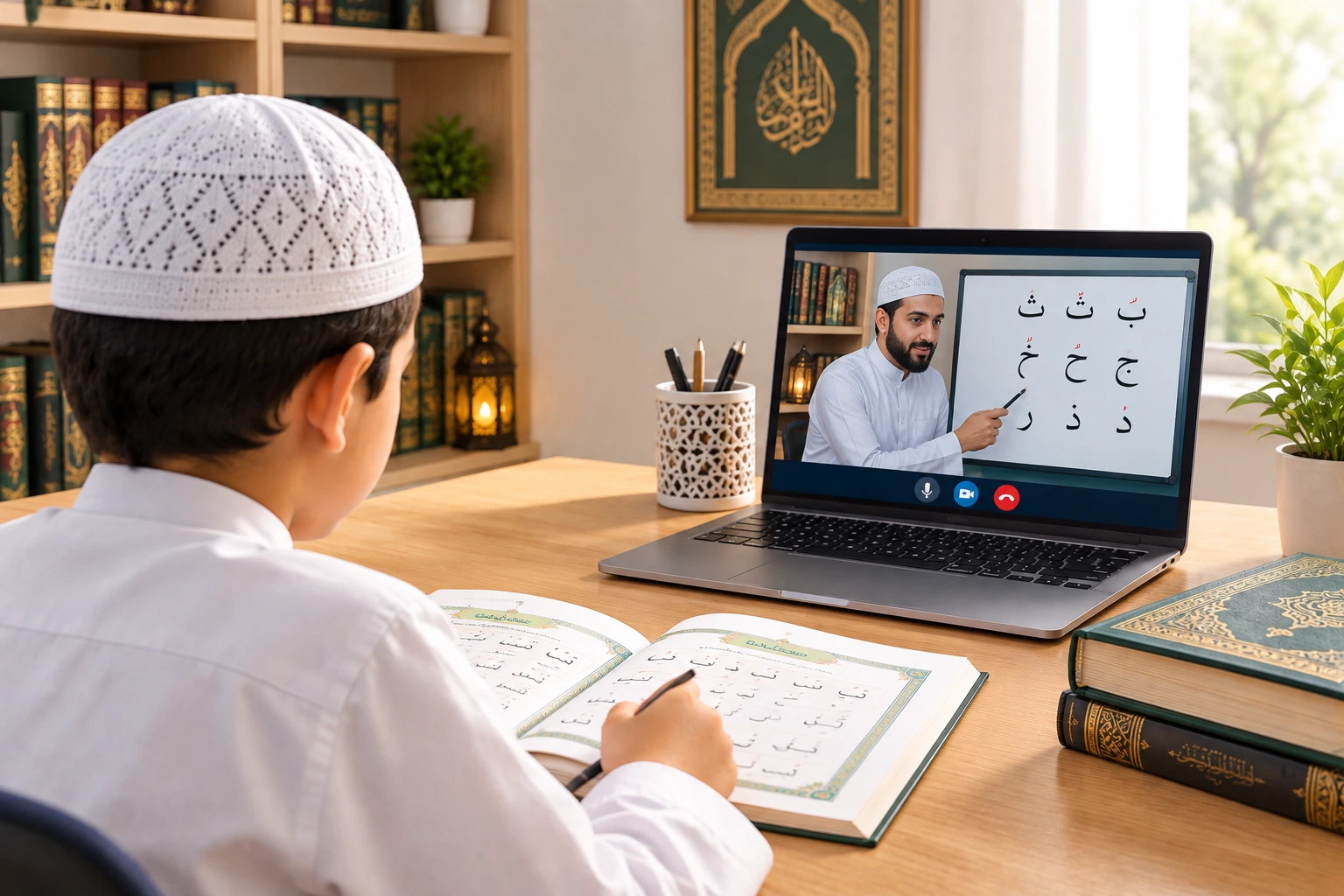
Teaching children about Islam can be both structured and engaging. Lessons should introduce the faith in language children understand, give them opportunities to participate, and help them connect what they learn with everyday life. Quran, Tajweed, Arabic, and other Islamic subjects can work together to support that process.
An Islamic learning plan for children can bring together Quran, Tajweed, Arabic, Tafsir, Fiqh, Aqeedah and Hadith at an appropriate level. Connect these subjects with practical examples that support faith, understanding and good character.
Islamic education also supports moral development and a sense of belonging to the faith. Rather than treating learning as a collection of facts, teachers and parents can help children see its connection with worship and good conduct. Read the importance of Islamic education for the wider purpose of this work.
Table of Contents
- Learning Islam through Age-Appropriate Online Lessons
- Five Features to Look for in Children's Islamic Classes
- Seven Subjects in a Children's Islamic Learning Programme
- How Online Lessons Can Support Children
- Faith, Manners, and Broader Development
- Choosing an Islamic Studies Programme for Your Child
- Four Steps to Arrange Children's Lessons
- Frequently Asked Questions
Learning Islam through Age-Appropriate Online Lessons
The original programme is described as suitable for children of different ages and abilities. New learners need a clear introduction, while those already familiar with basic teachings need a plan that builds on what they know. The teacher should adapt the pace and explanation to the child.
Online lessons can connect a child with a tutor from home and help a family arrange a workable schedule. Their educational value depends on consistent participation, clear correction and teaching that remains engaging through the screen.
Five Features to Look for in Children's Islamic Classes
Use the following features to compare Islamic learning programmes and ask how each will be applied in your child's lessons:
- Qualified teachers: The source describes experienced native Arabic-speaking tutors with study at institutions such as Al-Azhar and Madinah. Ask about the qualifications and child-teaching experience of the assigned tutor.
- Interactive activities: Stories, quizzes, and suitable activities can encourage participation and make a lesson easier to follow.
- A tailored plan: An initial assessment should help the teacher choose work that matches the child's current knowledge.
- Convenient scheduling: Agree lesson times that fit the family routine and allow dependable attendance.
- Clear, manageable fees: The source advertises competitive pricing to support access. Compare the actual package, lesson length, and terms before booking.
For a child beginning Quran lessons, the checks in choosing an online Quran teacher can help you assess the teaching relationship as well as the course description.
Seven Subjects in a Children's Islamic Learning Programme
The source's children's course outline covers seven areas. Each contributes something different to the learner's education, so the programme should explain how the subjects are introduced at an appropriate level.
1. Quran Classes
- Reading and memorization: Children develop Quran reading gradually, with work paced to their ability.
- Hifz: A personalized memorization plan gives students suitable new portions and revision tasks.
- Tajweed: Practical sound and rule instruction supports careful Quran recitation.
Children beginning memorization can follow the principles in our beginner's Hifz guide.
2. Tajweed Classes
- Explain recitation rules using simple language and suitable examples.
- Give children practical reading time so the teacher can correct pronunciation and guide the sound of the recitation.
3. Arabic Classes
- Use interactive practice for speaking, listening, reading, and writing.
- Connect language learning with Quranic vocabulary so that children begin recognizing words they recite.
The first stage may include learning Arabic letters and their sounds before moving into longer reading or conversation.
4. Tafseer Classes
- Introduce the meanings of Quranic passages through age-appropriate explanations.
- Discuss lessons connected with children's lives, including prayer and good character.
5. Fiqh Classes
- Teach introductory worship topics such as wudu, Salah, fasting, and other basic practices.
- Use practical activities to help children remember and apply what they learn.
6. Aqeedah Classes
- Present the Five Pillars of Islam and the Six Articles of Faith clearly.
- Discuss Tawheed, the Oneness of Allah, at a level children can understand.
7. Hadith Classes
- Introduce suitable hadiths about kindness, prayer, patience, and good conduct.
- Help children relate those teachings to following the Sunnah in daily life.
How Online Lessons Can Support Children
Online learning can be especially useful where local Islamic classes are limited, including for families living in countries where Muslims are a minority. The source highlights four practical advantages:
- Parental supervision: Learning from home makes it possible for parents to observe and support lessons. Appropriate safeguarding arrangements remain important.
- An adaptable pace: A teacher can give a child more time on a topic before moving forward.
- Access beyond the local area: Families can consider tutors who would otherwise be too far away.
- Parent-teacher communication: Progress updates and discussion help parents remain involved.
These advantages work best when parents and teachers use them actively. Arrange a suitable learning space, attend consistently, and ask what the child should practice after class.
Faith, Manners, and Broader Development
The source identifies four outcomes its programme aims to support:
- Character: Quran and Hadith learning can introduce empathy, patience, honesty, and kindness through practical examples.
- Islamic identity: Early learning can help children become more confident in their understanding of the faith.
- Etiquette: Lessons can discuss respect for parents, elders, and peers and help children practice good manners.
- Language and thought: Arabic, Quran, and Tafseer study can provide opportunities to develop language skills and thoughtful discussion alongside spiritual learning.
These are educational aims rather than automatic results from enrollment. A supportive lesson plan and reinforcement at home help children put the ideas into practice.
Choosing an Islamic Studies Programme for Your Child
The original provider recommends its online Islamic Studies course as a structured, supportive route to understanding the faith. It describes qualified teachers and a nurturing learning environment intended to help children grow in knowledge and confidence.
When choosing your own programme, discuss your child's age, existing knowledge, attention, and learning goals. Ask which subjects are included and how the teacher introduces them. A suitable course should explain both the plan and the role parents can play.
Explore Islamic Studies and Quran lessons
Four Steps to Arrange Children's Lessons
The source sets out a simple enrollment pathway for its children's course. These steps can also help you organize a careful start with your chosen provider:
- Visit the course information and review the available children's lessons.
- Choose a package that matches the child's needs and goals.
- Arrange a trial, where offered, to meet the teacher and observe the approach.
- Complete registration and confirm when regular learning begins.
Use the trial to ask questions and observe how the tutor interacts with your child. The expectations described in a Quran teacher's responsibilities provide useful checks for Quran-related lessons. Keep the next step manageable so that the family can establish a dependable learning routine.
Related Reading and Learning Options
Explore related articles and course options below. External Quran and language references are retained where they support the topic.
- Talqeen Academy
- Choosing Online Quran Courses for Kids
- Quran classes for kids
- Tajweed classes for Kids
- Arabic classes for Kids
- Tafseer classes for kids
- Online Islamic Classes for Kids
 Talqeen Academy
is a globally recognized platform for learning the Quran, Arabic,
and Islamic Studies through personalized one-on-one online sessions with expert tutors.