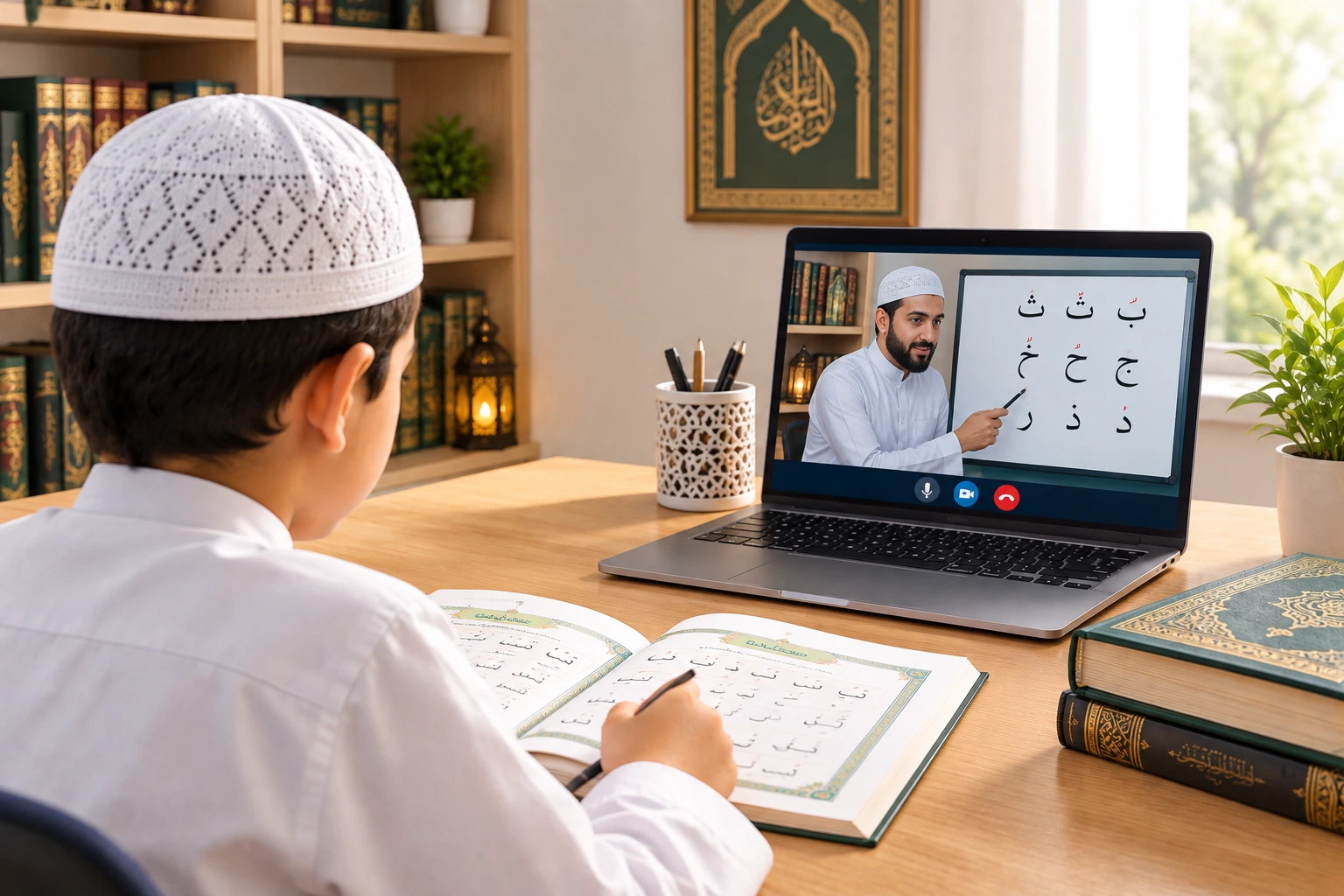
Quranic learning can help parents introduce faith, good character and responsibility through everyday relationships. Children need understandable explanations and caring examples, not only instructions to memorize words.
The source offered ten parenting practices, prophetic stories and age ranges. The guidance below retains those ideas while distinguishing Quranic passages, identifiable Hadith and popular sayings that should not be attributed confidently to the Prophet.
Table of Contents
Ten Practices for a Quran-Informed Upbringing
1. Introduce Tawhid Simply
Explain that Allah is the Creator and Sustainer and alone deserves worship. Everyday observations such as the sky, trees and animals can begin a conversation. Al-Ikhlas 112:1–2 introduces Allah's oneness and self-sufficiency.
Use clear, age-appropriate language, repeat the ideas naturally and model sincere worship. Expressions such as Alhamdulillah and SubhanAllah can be taught with their meanings. Suitable children's Islamic studies may complement family learning.
2. Explore Prophetic Stories
| Source example | Learning theme | Reference and context |
|---|---|---|
| Ibrahim | Faith amid adversity. | 21:69 describes the fire being made cool and safe. |
| Yusuf | Patience, reconciliation and gratitude. | 12:100 concerns reunion and fulfilled understanding; forgiveness is also discussed elsewhere in the surah. |
| Musa | Trust and steadfastness. | 20:77–78 describes departure through the sea and pursuit. |
| Muhammad | Learning from the prophetic example. | 33:21 identifies the Messenger as an excellent example, rather than narrating one particular act of kindness. |
Read carefully, explain the lesson and invite questions. Early Islamic history can also be taught, but should be identified as history rather than assumed to appear in the Quran.
3. Practise Kindness and Patience
Show sharing, helping and apologising in family life. Al-Baqarah 2:153 connects patience and prayer. Encourage waiting for a turn and dealing with frustration, and praise specific effort.
A modest reward system for helping siblings or sharing toys may support practice. Parents should also demonstrate patience when circumstances are difficult.
4. Learn Quranic Dua Together
رَبِّ زِدْنِي عِلْمًا
“Rabbi zidni ilma” asks for increased knowledge in Taha 20:114.
رَبَّنَا آتِنَا فِي الدُّنْيَا حَسَنَةً
“Rabbana atina fid-dunya hasanah” is the opening part of the supplication in 2:201; it is not the whole ayah or complete dua. Practise slowly, explain meaning and use flashcards if helpful.
The source suggested practice before Quran lessons or during daily activities. That can be a learning arrangement, without calling it a fixed required ritual for every class.
5. Model the Conduct You Teach
Let children see prayer, honesty, kindness and simple worship habits, including Bismillah before eating and gratitude afterwards. Avoid relying on shouting or expecting children to imitate lessons adults disregard.
Admit mistakes and seek forgiveness. A good example encourages learning, but does not guarantee that a child will automatically follow every practice.
6. Learn from Prophetic Gentleness
Bukhari 5376 records guidance to a child about mentioning Allah, using the right hand and eating from the nearby portion. Nasai 1141 describes the Prophet allowing time when a child climbed on him during prostration.
These examples support patient instruction and affection. Teach gradually, share reliable accounts and use encouraging feedback rather than attaching every reward-system detail to an unverified Prophetic practice.
7. Introduce Prayer Gradually
Abi Dawud 495 mentions instructing children in prayer at seven, discipline at ten and separate sleeping arrangements. The source quoted a translation containing physical discipline. It should not become a blanket practical instruction to strike children; interpretation, welfare and applicable child-protection requirements need care.
For this learning plan, explain prayer's meaning, teach Al-Fatihah and basic prayer words, invite participation and use gentle reminders. Age alone does not establish identical understanding in every child.
8. Teach Respect for Parents with Understanding
Luqman 31:14 teaches care and gratitude toward parents. Explain requests, involve children appropriately and praise cooperation. The account of Ismail and his father's trial can be studied with qualified explanation; it is not permission for unlimited parental demands.
Connect a tidy room with a useful habit without attributing your own exact phrasing to revelation. Respect should develop through a caring relationship, not harsh commands.
9. Create a Supportive Environment
Al-Baqarah 2:168 speaks of lawful and wholesome food. Consider family meals, suitable media, good companions and books or stories that reinforce constructive values.
Reduce gossip and hostile arguments, and explain boundaries rather than merely issuing unexplained prohibitions. Guidance should encourage questions and learning.
10. Balance Accountability with Mercy
Az-Zalzalah 99:7 teaches that even the smallest good deed matters. Use everyday examples such as sharing and honesty, encourage repairing mistakes and teach Allah's mercy alongside accountability.
Children's developmental and religious responsibility should not be collapsed into an adult judgement framework. Avoid making every small mistake a source of fear.
Faith, Family and Gradual Development
Al-Tur 52:21 speaks of believing descendants joining their believing families. It encourages reflection on faith across generations without guaranteeing a particular child's future through one parental method.
The source proposed ages zero to seven for play and bonding, seven to fourteen for instruction, and fourteen to twenty-one for advice and increasing independence. Retain these as a popular educational framework, not rigid developmental rules.
Islamweb's discussion of that saying does not identify it as an established Prophetic Hadith. Loving play, teaching and listening remain relevant across ages.
Family Learning and Suitable Support
Combine stories, Sunnah practices, prayer, Quran study and caring relationships. The source advertised experienced tutors and guaranteed effective values programmes; those are provider claims, not established Talqeen results.
See actual courses, a family Quran learning guide and children's Qaida practice. Choose support that fits the child's level and keeps learning connected with good conduct.
 Talqeen Academy
is a globally recognized platform for learning the Quran, Arabic,
and Islamic Studies through personalized one-on-one online sessions with expert tutors.