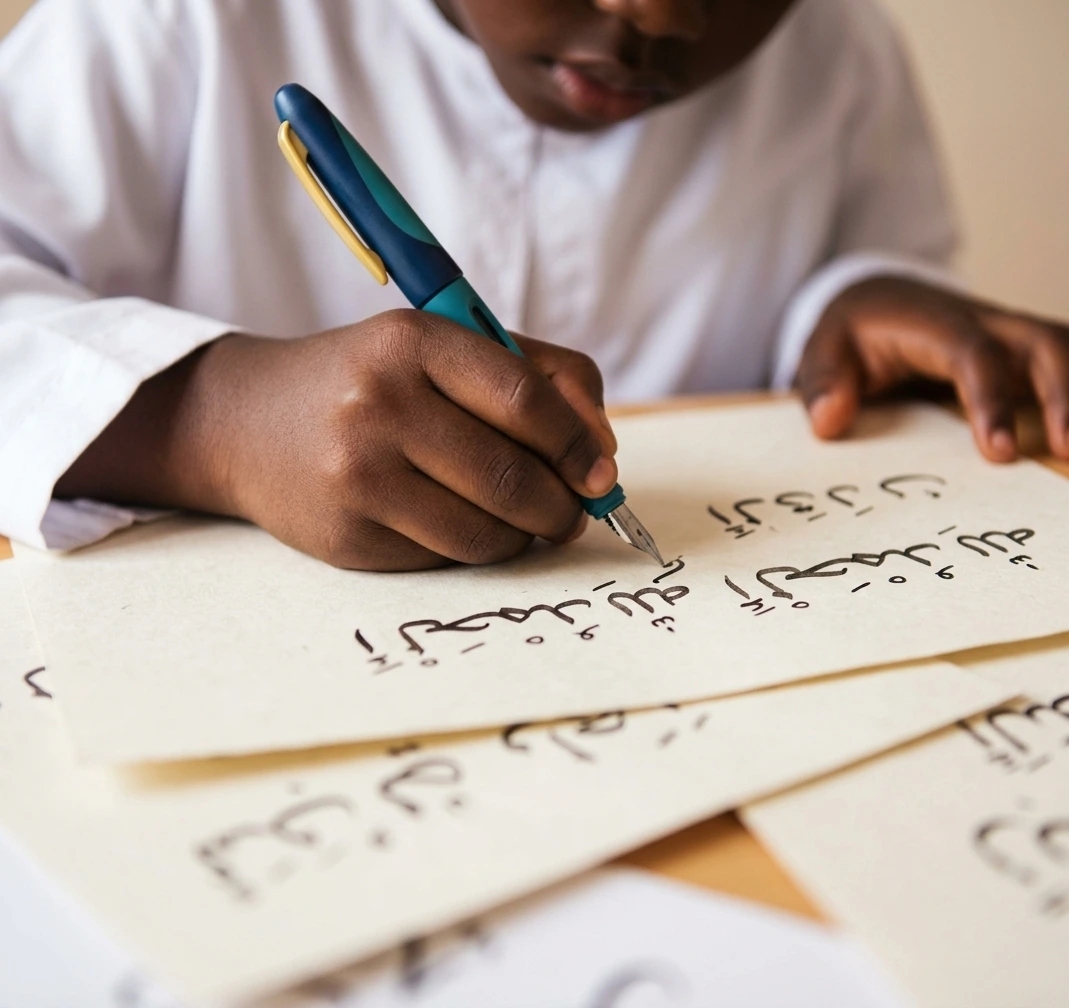
Play can give children a reason to use Arabic words rather than only repeat them from a list. A game, story or pretend conversation creates a small task with an understandable goal. The activity works best when the language level is suitable and an adult can model and correct the target words.
The source linked playful learning with speaking, problem-solving, culture and confidence. It referred to studies without identifying them, so its broad claims about increased intelligence and guaranteed language mastery are not established here. Engagement is useful, but should be checked through actual learning.
Table of Contents
Why Interactive Activities Can Help
A child might hear a word, match it with a picture, say it in a turn and later use it in a story. This provides varied practice with the same material. Simple rules reduce anxiety about speaking, while a manageable challenge keeps the activity purposeful.
The source emphasised curiosity, recall, social connection and enjoyment. These are possible educational aims, not automatic results for every child. A quiet learner may prefer a matching task over performance, and a child who enjoys a game may still need help using the words outside it.
Choosing an Online Arabic Programme
For children's Arabic lessons, compare the teacher's language-teaching skills, interactive activities, curriculum, timetable and fees. Use a trial to see how games connect with meaningful speaking, listening and reading practice.
Its described syllabus included the alphabet and pronunciation, vocabulary, sentence structure, conversation, reading and writing. Ask which of those objectives is addressed at your child's current level and how progress is assessed. A friendly tutor should make instructions understandable and allow time for the child to speak.
The source also claimed a focus on Quranic Arabic and Modern Standard Arabic. MSA supports formal reading and communication, while everyday spoken varieties differ. Choose the language variety and learning aim deliberately rather than expecting one beginner course to cover every context.
Practical Ways to Use Play
Board Games and Cards
Letter matching, picture cards and word-building games can practise recognition and vocabulary. The source named Arabic Scrabble, Arabic Uno and Arabic Dominoes. Treat these as proposed game formats or adaptations, not verified commercial products or universally available editions.
Use only the words needed for the lesson. For example, match a picture to a known noun, then ask the child to say it in a short phrase. Too many unfamiliar cards can turn the task into guessing rather than useful practice.
Digital Activities
The source suggested Duolingo, Kaleela and a generically named Arabic for Kids resource. Current content, prices, age suitability and privacy arrangements were not verified recommendations here. Check the actual app, language variety and lesson before using it.
Choose a specific objective, such as recognising three letters or hearing several familiar words. Stop and ask the child to use those words without the app. Colourful screens and points do not by themselves demonstrate retention.
Role-play
Pretend to visit a shop, greet a relative or order food using language already introduced. Model the exchange, let the child change a detail and repeat with roles reversed. This can connect vocabulary with an actual communicative purpose.
Keep corrections brief and supportive. If the child is concentrating on one new structure, do not interrupt every minor error at once. Note what needs a separate short practice later.
Storytelling
Tell a short picture story, ask the child to name a character or object, and invite a simple continuation. Acting out a familiar dialogue can practise listening and speaking. The source encouraged cultural exploration through imaginative play; make the examples respectful and understandable rather than relying on stereotypes.
Bringing Arabic into Daily Life
The source suggested home conversations, labels on objects, reading and suitable videos. Introduce a few useful labels and revisit them in a real interaction. Asking for an object or describing a picture is more informative than only noticing the label on a wall.
Food, art, music and cultural events were its examples of wider exposure. Families can select activities appropriate to their values and interests. Enjoying a cultural activity may encourage curiosity, but does not replace deliberate practice in reading, writing or grammar.
Balancing Enjoyment and Progress
Combine repeated language with a little variety. Observe whether the child can recognise, say and use the target material later. Adjust the game when it is too hard, too easy or distracting. A playful approach may support a positive relationship with Arabic, but cannot promise lifelong enthusiasm or fluency.
See alphabet foundations and children's reading activities. Confirm actual teaching through course information. The source's repeated enrolment and free-trial invitations are not presented as Talqeen offers.
 Talqeen Academy
is a globally recognized platform for learning the Quran, Arabic,
and Islamic Studies through personalized one-on-one online sessions with expert tutors.