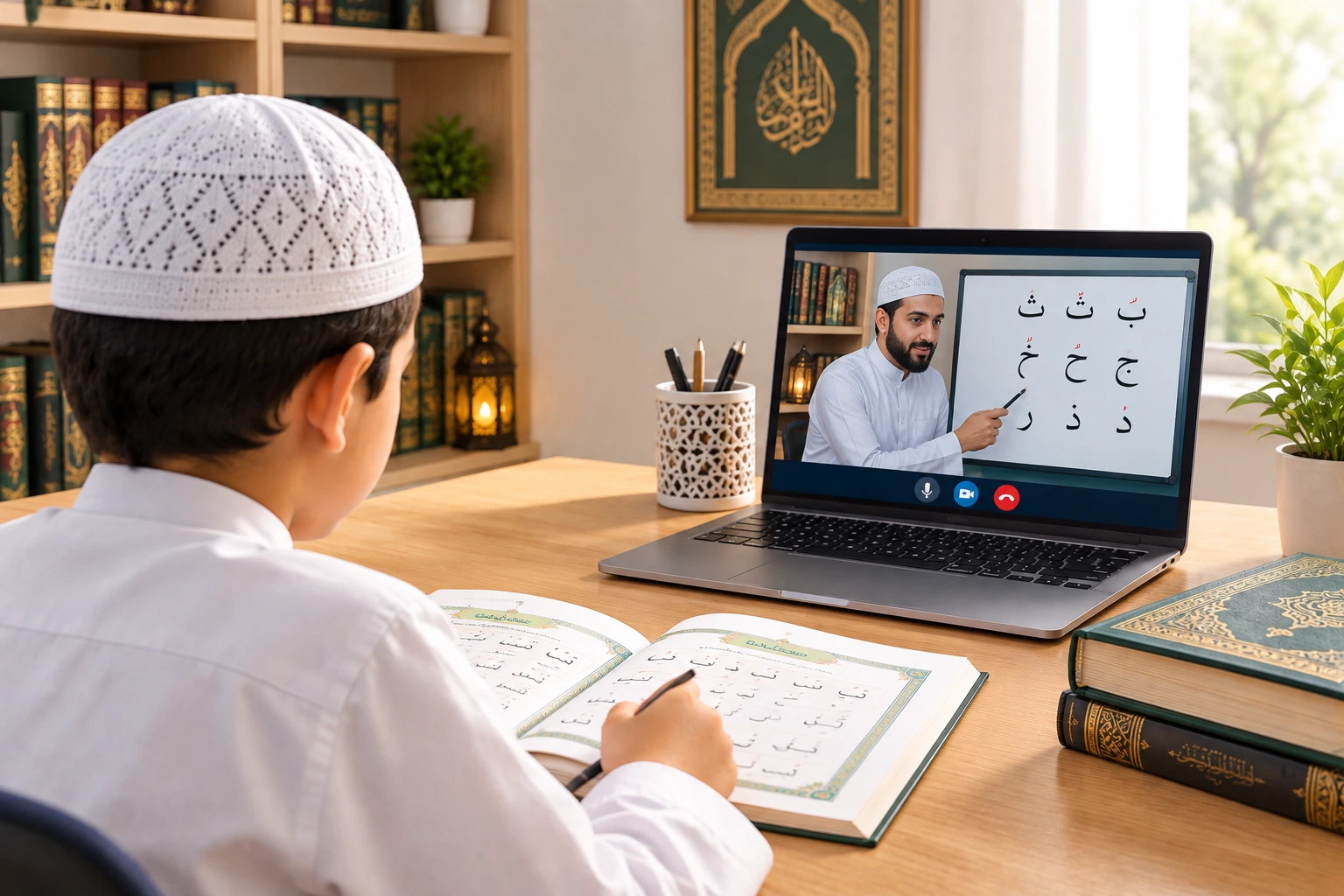
Helping a child read and memorise the Quran works best when the lessons fit the child’s level and the family’s routine. Children need clear pronunciation, achievable practice and encouragement that makes learning feel meaningful. Online lessons can provide access to teaching from home, while parents help maintain the habit between classes.
For a busy family, convenience matters, but it should be considered alongside teaching quality. This guide brings together ten practical ways to support Quran reading, memorisation and Tajweed. Start with the child’s current skills rather than expecting every learner to follow the same timetable.
Table of Contents
What Should a Child-Friendly Quran Programme Offer?
When comparing children's Quran lessons, check five features: relevant recitation qualifications, engaging age-appropriate activities, adaptation to the child's pace, a workable timetable and clear fees. Ask how these features appear in an actual lesson.
- Ask about the teacher’s relevant qualifications and actual experience with children.
- Observe how visuals, questions and stories serve the learning goal.
- Check whether the plan changes when a child needs more revision.
- Confirm lesson times, cancellation arrangements and family commitments.
- Review the full cost and what the package includes.
Learning Quran, Arabic and Islamic Studies from home can be a convenient option when the programme suits the learner. See Talqeen Academy’s courses for available learning options, and use a trial to discuss your child’s needs.
10 Ways to Make Quran Learning More Manageable
The source heading refers to seven ways, but its list contains ten. All ten approaches are included below, with the heading corrected to match the content.
1. Choose an academy that matches the learning goal
Reading, Tajweed and Hifz are related, but they require different lesson priorities. A beginner may need letter recognition and word reading before a demanding memorisation plan. A child who already reads may need targeted correction or a sustainable Hifz routine.
- Look for tutors with relevant teaching knowledge.
- Ask for lessons adapted to the child’s starting level.
- Check that classes involve the child actively rather than relying on long explanations.
Use the guide to choosing a Quran teacher for your child to prepare questions for the first meeting.
2. Add suitable apps for extra practice
A well-chosen digital activity can reinforce a lesson through clear audio, games or quizzes, and progress tracking. Listen to the recordings yourself and make sure the exercise practises what the teacher has introduced.
Keep app use supervised and limited. Progress badges measure completion within the app; they do not necessarily show accurate pronunciation or secure memorisation. Ask the child to read back the material and let the teacher check it.
3. Establish a regular routine
Flexible lesson hours can help families fit study around school and other commitments. Choose a realistic time and reserve a small daily practice period, rather than leaving revision until the next class.
- Agree on lesson times the family can maintain.
- Include brief daily practice between lessons.
- Review an earlier passage before introducing new material.
Consistency does not require identical session lengths every day. A short, attentive review is often more useful than an ambitious plan that the family repeatedly misses.
4. Make lessons engaging and understandable
Slides, illustrations and appropriate videos can clarify a teaching point. Stories can connect a lesson with patience, honesty or gratitude in daily life. Small rewards can recognise effort and completed targets.
Use these tools purposefully. A colourful activity should still give the child opportunities to listen, read and receive feedback. Choose stories and explanations suitable for the child’s age, and avoid turning every lesson into a competition for prizes.
5. Introduce Tajweed alongside accurate reading
Tajweed helps learners attend to articulation and the features of Quran recitation. Children can begin with clear sounds and simple correction before learning extensive terminology. Introduce rules in examples the child is already able to read.
If a course offers children’s Tajweed lessons, ask how the teacher sequences the rules and checks understanding. For pronunciation practice, continue with the Arabic alphabet and Tajweed.
6. Begin with manageable surahs
Al-Fatihah and Al-Ikhlas are useful starting passages for many learners. Listen to a clear recitation, practise a small section and repeat it accurately before adding more. Do not assume that familiarity from listening means the child can recite independently without errors.
Combine new learning with revision. A teacher can divide a surah into suitable portions and check that the child remembers earlier parts as well as the most recent ayah. The choice and pace should reflect the learner’s readiness.
7. Prepare a calm study space
Choose a quiet, well-lit area where the child can see the book and hear the teacher. Set up the laptop or tablet before the lesson, test the sound and reduce unnecessary notifications. A comfortable seat and a stable connection help the child focus on the actual task.
The space does not need to be elaborate. The important features are limited distractions, usable equipment and an adult who can help when technical problems interrupt the lesson.
8. Stay involved as a parent
Observe enough of the lessons to understand the teacher’s instructions, particularly with young children. Ask what to review afterwards and help the child practise the same examples at home.
- Notice what the child can do independently and what still needs help.
- Practise the assigned passage after the lesson.
- Use short home activities that support the teacher’s current target.
Parental involvement should encourage the child rather than create a second, conflicting lesson plan. Share concerns with the teacher and keep corrections consistent.
9. Check support and feedback arrangements
The source programme advertises round-the-clock support, parent feedback and trial sessions. Verify actual support hours and channels before enrolling; a promotional “24/7” statement should not be assumed to describe every provider.
A useful programme explains how parents receive progress updates, whom to contact about missed lessons and how the trial is assessed. Use the trial to see how the teacher responds to mistakes and whether your child is comfortable participating.
10. Connect learning with dua and daily practice
Quran learning can sit alongside age-appropriate duas, prayer habits and discussion of Islamic values. Help the child understand that study is part of a continuing relationship with faith, rather than only a page target.
Regular home practice and a teacher who understands children's needs can support each other. Look for patient correction, manageable activities and a pace that helps the child participate confidently.
How to Approach a Trial and Enrolment
The original enrolment process describes registering for a free trial, meeting a teacher for an assessment and choosing a package. Follow the same practical sequence when comparing options, while confirming the current offer and any conditions with the chosen provider.
- Request a trial and explain the child’s age, reading ability and goal.
- Observe the lesson and ask how the teacher would support the child.
- Review the proposed schedule, package, fees and parent responsibilities before deciding.
You can discuss a trial with Talqeen Academy through its booking link. A first session should help establish the starting level and a realistic next step; it should not be treated as a promise of rapid memorisation.
Combine Good Teaching with a Supportive Home Routine
Technology makes home learning more accessible, while careful teaching and parent participation give it substance. A calm space, suitable short surahs, daily revision and gentle encouragement help children develop reading and memorisation skills over time.
Choose a programme that fits your child, review progress regularly and adjust the pace when needed. Continue with Noorani Qaida for young children and readiness for online Quran lessons to build a stronger foundation at home.
Related Reading and Learning Options
Explore related articles and course options below. External Quran and language references are retained where they support the topic.
- Online Quran Classes for Kids
- Learn Quran, Arabic & Islamic Online
- Talqeen Academy
- Book Free Trial Class Now
- Free Trial Lesson
 Talqeen Academy
is a globally recognized platform for learning the Quran, Arabic,
and Islamic Studies through personalized one-on-one online sessions with expert tutors.