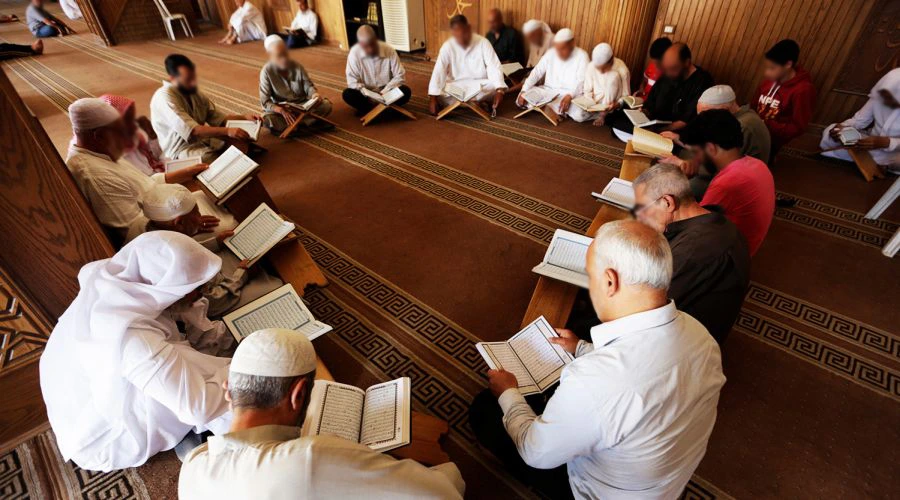
Almost every Quran student, child or adult, goes through a flat period. The first weeks bring excitement and quick gains, then progress slows, life gets busy, and the lesson starts to feel like a chore.
That dip is normal and it is the moment where most people stop. These ideas are about getting through it.
Table of Contents
Why motivation fades
- The novelty wears off. Early progress is fast because everything is new.
- Plateaus. Progress becomes harder to see even though learning continues.
- Life events. Exams, work, travel, illness.
- Targets that are too hard. Repeated feeling of falling behind.
Knowing these causes helps because the fix for each is different.
Make small wins visible
A student who reads a page smoothly that was hard a month ago should know it. Keep a short log of what you could not do last month and can do now. Tick off milestones: first full surah read without help, first line recited from memory. Looking back often shows more progress than it feels like in the moment.
Reconnect with the intention
The Prophet ﷺ said: "The best of you are those who learn the Quran and teach it" (Sahih al-Bukhari). Take a moment, especially in a flat patch, to remember why you started: to pray better, to read the words of Allah properly, to help your children. Writing your reason on the first page of your notebook gives you something to return to.
Reduce, do not quit
In a slump, the best move is usually to shrink the target, not abandon it. Cut daily practice to five minutes. Keep the lesson time. The habit survives, and energy returns more easily to a routine that never fully stopped.
Add accountability
- Fixed lesson times with a teacher who expects you.
- A study partner or family member who asks about your lesson.
- For children, a parent who attends the first minutes and asks about it afterwards.
Rewards for children: keep them small and tied to effort
Praise specific effort ("You paused and fixed that word yourself") works better than general praise. A simple chart, with a small celebration after a few weeks of consistency, can help young children feel progress. Avoid making rewards depend on how fast they progress compared to anyone else.
Reconnect with meaning
Learning what a short surah means can change how it feels to recite. Even a one-line explanation of the theme can bring a passage to life. For adults ready to go further, Quranic Arabic for beginners opens understanding step by step.
Talk to your teacher
If motivation has dropped, say so. Teachers can change the material, shorten the lesson, add variety or set an easier short-term target. They cannot help with a problem they do not know about.
Frequently asked questions
Continue your learning with How to Improve Your Quran Recitation Voice: 8 Practical Tips, How to Memorise Surah Al-Fatihah: 8 Practical Tips, How to Make Time for Quran Study as an Adult: 10 Practical Tips.
 Talqeen Academy
is a globally recognized platform for learning the Quran, Arabic,
and Islamic Studies through personalized one-on-one online sessions with expert tutors.