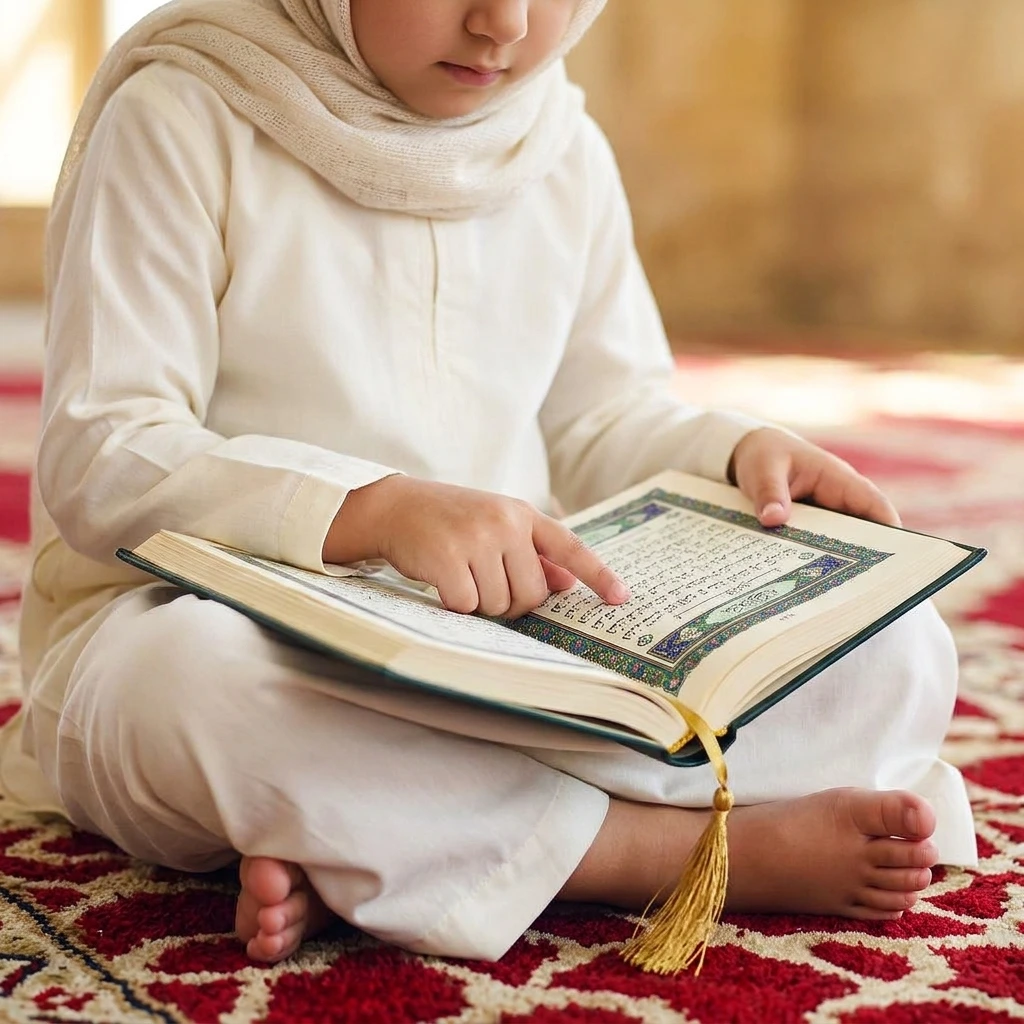
Surah Al-Fatihah has a central place in Salah, making it an important early learning goal. A clear recitation model, small practice portions and an understanding of its meanings can help a beginner learn it accurately. Repetition should reinforce the correct wording rather than an unnoticed mistake.
The source recommends eight approaches, from repeated reading to listening, prayer practice and visual aids. Use them with suitable feedback and adapt the amount of practice to the learner. For a reading foundation, see beginner Quran recitation.
Table of Contents
8 Practical Ways to Learn Al-Fatihah
1. Read and repeat it carefully
The source suggests reading Al-Fatihah five times in a row, with seven or nine repetitions as optional variations. These numbers are practice examples, not religiously prescribed counts or guarantees of memorisation. Choose an amount that remains attentive and accurate.
Find a quiet place and read slowly. If a teacher identifies an error, practise the corrected portion before repeating the whole surah. Once you can read it accurately, try recalling a suitable section without looking and return to the Mushaf to check.
2. Listen to measured recitation with Tajweed
A suitable recording can show the correct letters, lengths and phrase connections. Follow the printed text, listen to a small portion and repeat it. Focus on accuracy rather than copying a reciter’s voice or performance style.
The source cites the instruction “And recite the Qur’an with measured recitation” from Al-Muzzammil 73:4. Slow, clear practice helps you notice the words and apply what the teacher has explained.
Recordings provide a model, but a teacher should still hear your own reading. A learner can imitate something incorrectly without recognising the difference.
3. Listen attentively when the imam recites audibly
Hearing Al-Fatihah in prayers with audible recitation can reinforce familiarity. Notice clear pronunciation and measured delivery when you can hear the imam. Not every prayer has audible recitation, so the source’s suggestion of hearing it in every prayer needs this qualification.
The source also suggests mentally following familiar words. Follow appropriate prayer practice rather than turning Salah into an independent classroom drill. Ask a knowledgeable teacher about reciting behind the imam if you need guidance, since the details are not identical across legal schools.
4. Learn one ayah or manageable phrase at a time
Practise a small portion accurately, recall it, then connect it to the next. The source gives several Arabic phrases and meanings, but omits the basmalah and separates the final passage into two rows. The complete sequence below follows the common numbering that counts the basmalah as ayah 1; use your Mushaf and teacher’s numbering conventions.
| Ayah in this numbering | Arabic | Meaning for learning |
|---|---|---|
| 1 | بِسْمِ اللَّهِ الرَّحْمَٰنِ الرَّحِيمِ | In Allah’s name, the Most Merciful, the Bestower of mercy. |
| 2 | الْحَمْدُ لِلَّهِ رَبِّ الْعَالَمِينَ | Praise belongs to Allah, Lord of all worlds. |
| 3 | الرَّحْمَٰنِ الرَّحِيمِ | The Most Merciful, the Bestower of mercy. |
| 4 | مَالِكِ يَوْمِ الدِّينِ | Master of the Day of Judgement. |
| 5 | إِيَّاكَ نَعْبُدُ وَإِيَّاكَ نَسْتَعِينُ | We worship You alone and seek Your help alone. |
| 6 | اهْدِنَا الصِّرَاطَ الْمُسْتَقِيمَ | Guide us to the straight path. |
| 7 | صِرَاطَ الَّذِينَ أَنْعَمْتَ عَلَيْهِمْ غَيْرِ الْمَغْضُوبِ عَلَيْهِمْ وَلَا الضَّالِّينَ | The path of those You have favoured, excluding those under anger and those who have gone astray. |
Compare the complete text with Surah Al-Fatihah. The final ayah can be practised in two suitable learning portions—صِرَاطَ الَّذِينَ أَنْعَمْتَ عَلَيْهِمْ and غَيْرِ الْمَغْضُوبِ عَلَيْهِمْ وَلَا الضَّالِّينَ—before joining it, without treating every learning portion as a separate ayah.
The source notes that its children’s Hifz programme begins with Al-Fatihah for motivation. That is one teaching choice, not a required starting order for every child. Explore Talqeen Academy’s courses to discuss an appropriate plan.
5. Connect the words with a suitable meaning
Meaning can help you recognise the surah’s progression: praise, Allah’s mercy, judgement, worship and seeking guidance. For example, الْحَمْدُ لِلَّهِ connects the words with gratitude and praise directed to Allah.
Reflect on a manageable portion while learning, and ask a teacher about an explanation you do not understand. Meaning supports engagement; it is not a guarantee of faster memorisation and does not replace accurate Arabic reading.
6. Reflect on its supplication in daily dua
The source highlights إِيَّاكَ نَعْبُدُ وَإِيَّاكَ نَسْتَعِينُ and اهْدِنَا الصِّرَاطَ الْمُسْتَقِيمَ as words that express worship, reliance and a request for guidance. Their meanings can make revision more purposeful.
Use accurate Quranic wording when quoting a passage, and distinguish personal dua or reflection from an obligatory formula. Recalling the meanings outside lessons can help you stay connected with what you are learning.
7. Reinforce accurate recitation through Salah
Al-Fatihah’s importance in prayer is reflected in Sahih al-Bukhari 756. Practise outside prayer so that you can recite it with greater care during Salah, and have uncertainty checked by a suitable teacher.
The source recommends reciting it more than once during prayer for practice. Do not infer that it should be repeatedly inserted into a single prayer unit as a memorisation exercise. Its normal recurrence across prayer units provides opportunities for reinforcement; follow the prayer guidance you are taught.
If you make a mistake, work on the specific difficulty in your next practice session. Questions about correcting an error within Salah should be discussed with a knowledgeable teacher.
8. Use a clear poster or study card
A readable Al-Fatihah poster can provide a visual reminder, especially for a child. Place it in an appropriate study area, make sure the Arabic is accurate and large enough to read, and follow it together during a planned practice session.
Colourful design can attract interest, but the text must remain clear. A poster complements the Mushaf and teacher’s model; it does not establish that the child has memorised correctly. Check recall without looking after guided practice.
Learn the Complete Surah with Meaning and Feedback
Repeated reading, measured listening, small portions and a clear understanding of meaning can make Al-Fatihah more approachable. Keep the full text and appropriate numbering in view, and return to corrected passages until they are secure.
The source concludes by promoting a comprehensive memorisation programme with experienced tutors and personalised support. Evaluate those features in an actual lesson rather than relying on a claim that a platform is the “best.” Continue with encouraging children’s memorisation or word-by-word recitation practice for the next stage.
Related Reading and Learning Options
Explore related articles and course options below. External Quran and language references are retained where they support the topic.
- hifz program
- hifz teachers
- 73:4
- Hifz classes for kids
- Start Your Quran Journey Now
- How to Memorize a Quran Surah With a Clear Passage Plan
- Benefits of Memorizing Quran
- quran memorization program
 Talqeen Academy
is a globally recognized platform for learning the Quran, Arabic,
and Islamic Studies through personalized one-on-one online sessions with expert tutors.