Becoming an Aalimah, a female Islamic scholar, requires sustained study, qualified supervision and careful assessment. Women have contributed to Islamic teaching and transmitted knowledge across generations. A study plan can build on that history while preparing the learner to understand evidence, explain it responsibly and recognise the limits of her expertise.
The following ten steps cover the source's historical examples, Quranic learning, Hadith methods, Fiqh, Aqeedah, Tafsir and certification. They describe areas of preparation, not a guarantee that one short course or Quran ijazah establishes competence in every Islamic science.
Table of Contents
Ten Steps Toward Qualified Islamic Scholarship
1. Study Islamic History and Women's Contributions
Learn how women supported the early Muslim community, transmitted reports, taught others and demonstrated courage. Read reliable accounts in context rather than using inspirational summaries as a substitute for historical study.
| Historical figure | Contribution highlighted in the source |
|---|---|
| Khadijah bint Khuwaylid | Early belief in Islam and steadfast support of the Prophet. |
| Aisha bint Abu Bakr | Transmission of Hadith and instruction of members of the early Muslim community. |
| Fatimah bint Muhammad | An example associated with modesty, compassion and knowledge. |
| Asma bint Abu Bakr | Courage and assistance connected with the Hijrah. |
| Umm Salamah | Transmission of Hadith and contributions to understanding religious teachings. |
2. Develop Quran Recitation and Tajweed
Work with a competent teacher on pronunciation, reading marks and practical Tajweed. Daily practice and attentive listening to qualified reciters can support fluency. Correct sound and understanding of meaning are connected areas of study, but improved pronunciation does not automatically produce comprehension.
Have errors checked before repeated practice. See choosing Tajweed instruction for questions about feedback and teaching methods.
3. Memorize and Understand Key Passages
Combine memorization with explanation of meaning and application. The source suggested Al-Ikhlas 112:1–4 for Tawhid, Al-Baqarah 2:153 for patience and prayer, and Al-Mujadilah 58:11 for the value of knowledge. The first reference comprises four ayahs, not one individual verse.
Learn why a passage is relevant and how it fits its surrounding text. These examples begin a study plan; they do not replace broader Quranic learning.
4. Learn Hadith Collections and Evaluation
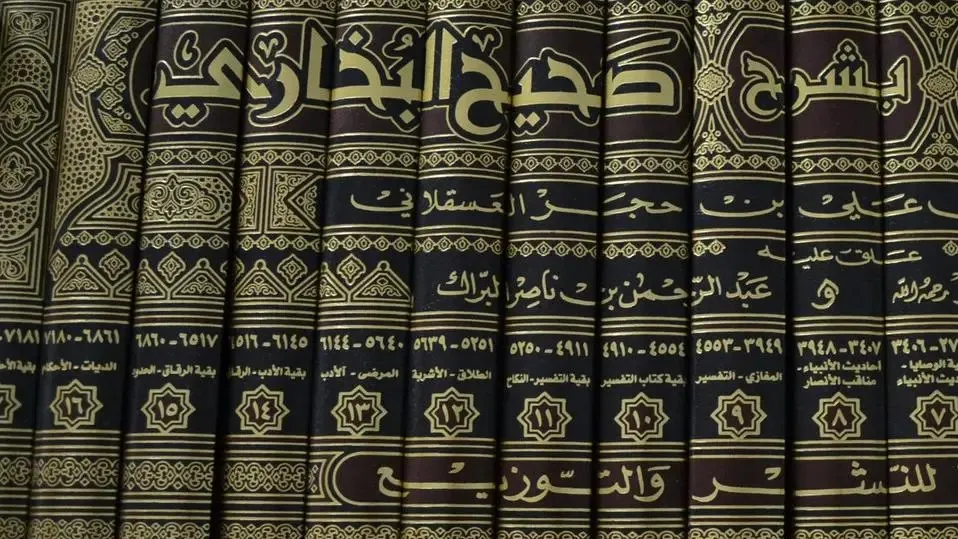
Study reports of the Prophet's words and practices through recognised collections, including Sahih al-Bukhari and Sahih Muslim. Learn the distinction between isnad, the chain of transmission, and matn, the reported text.
A supervised Hadith curriculum introduces narrator evaluation, relationships between reports and methods of interpretation. Knowing a collection's name or locating a translation does not alone qualify someone to authenticate a disputed narration.
5. Study Fiqh and Women's Jurisprudence
Fiqh addresses worship, personal conduct, financial dealings and family life. Learn its principles and the methods used to apply evidence. Women can pursue this broad curriculum as well as questions particularly relevant to their circumstances.
- Menstruation and purification.
- Marriage, divorce and inheritance.
- Modesty and dress.
- Rights and responsibilities within families and society.
Case discussions should identify the relevant school, evidence and circumstances. An introductory class is useful preparation, but does not authorise independent answers to every complex dispute.
6. Build Knowledge of Aqeedah
Study belief in Allah, His attributes, the prophets and the afterlife with a qualified teacher and suitable texts. A structured introduction to Tawhid helps a learner identify basic concepts before approaching advanced theological disagreements.
Questions and doubts deserve careful explanation rather than confident answers beyond the student's level. Assess understanding through discussion, not memorized terminology alone.
7. Study Tafsir with Context
Read recognised commentaries with attention to language, historical setting and relationships between passages. Study verses concerning women's rights and responsibilities within that wider framework. Contextual interpretation is important for all students, not uniquely for women.
Discuss contemporary applications with knowledgeable teachers. Personal reflection can support learning, but it should not be presented as an independent authoritative interpretation. An appropriately levelled Tafsir course may provide structure.
8. Examine the Sunnah in Practice
Study authenticated accounts of worship, family relationships, patience, compassion and the Prophet's treatment of women. Consider how actions are understood alongside their circumstances and other evidence.
Bring the ethical lessons into personal conduct while continuing to distinguish descriptive accounts, recommended practices and obligations under scholarly guidance.
9. Check Common Misconceptions Against Evidence
The source's table raised five important claims. Its wording about hijab required clarification: describing an act as personal does not establish that mainstream scholarship regards it as religiously optional.
| Claim to examine | More precise explanation |
|---|---|
| Women cannot pursue knowledge. | Women participate in religious learning and scholarly transmission. |
| Hijab is simply forced, or wholly optional. | Religious obligation and coercion are different questions; avoid conflating them. |
| Women cannot participate publicly. | Participation requires attention to the particular role and applicable Islamic guidelines. |
| Men have unrestricted control over women. | Women have recognised rights concerning property, education and marriage. |
| Forced marriage is automatically acceptable. | Consent matters; the source's general statement needs proper legal explanation. |
Dar al-Ifta's explanation of hijab describes an obligation. Bukhari 5138 reports that the Prophet invalidated a marriage disliked by Khansa after her father arranged it. Study detailed questions with a qualified scholar rather than treating a short table as a complete fatwa.
10. Seek Assessment and Appropriately Scoped Ijazah
An ijazah concerns a specified text, recitation or area of transmission. Ask what is assessed, what teaching it authorises and who grants it. A Quran ijazah is not automatically a qualification in Hadith, Fiqh or issuing fatwas, and every certificate is not necessarily an identical chain reaching the Prophet.
Complete the required studies and demonstrate competence through recitation, discussion or other relevant assessment. Continue learning after certification instead of treating it as the universal final step.
Can a Woman Become an Aalimah or Mufti?
Women may become scholars and teachers in Quran, Hadith and Fiqh. Titles such as Aalimah or Shaykha should reflect learning and recognised competence. Access to universities and advanced programmes can support this path, but the title alone is not evidence of expertise.
Dar al-Ifta's ruling on women undertaking ifta permits the role when the necessary scholarly and practical qualifications are met. Training includes jurisprudence, understanding actual circumstances and applying rulings responsibly. This should not be expanded into a claim that every religious or judicial position has identical conditions.
Choosing a Study Programme
The source advertised experienced female tutors, years of instruction and classes in Islam, Hifz and Tajweed for sisters. These are the original provider's claims, not verified Talqeen credentials. Compare actual syllabuses, teacher qualifications and assessment through course information.
For broader planning, read the Islamic scholarship study path. Build foundational skills before specialised responsibilities and seek honest feedback about readiness to teach.
 Talqeen Academy
is a globally recognized platform for learning the Quran, Arabic,
and Islamic Studies through personalized one-on-one online sessions with expert tutors.